
Theoretical and Applied Neuroscience
NATIONAL PHD PROGRAMME
A nationwide and interdisciplinary doctoral programme connecting neuroscience, medicine, psychology, biology, pharmacology, engineering, mathematics, computer science and the humanities to investigate the nervous system from molecular mechanisms to cognition, behaviour and clinical applications.
PROGRAMME AT A GLANCE
Coordinator: Prof. Roberto Ciccocioppo
Administrative institution: University of Camerino
Proposing School: School of Pharmacy and Health Products
Administrative and coordinating location: Camerino
Programme structure: Associated National and Industrial PhD Programme
Training network: Universities, research institutions, hospitals and companies across Italy
Duration: Three years
Curricula: Four research curricula
Administrative institution: University of Camerino
Proposing School: School of Pharmacy and Health Products
Administrative and coordinating location: Camerino
Programme structure: Associated National and Industrial PhD Programme
Training network: Universities, research institutions, hospitals and companies across Italy
Duration: Three years
Curricula: Four research curricula
NATIONAL DOCTORAL COMMUNITY
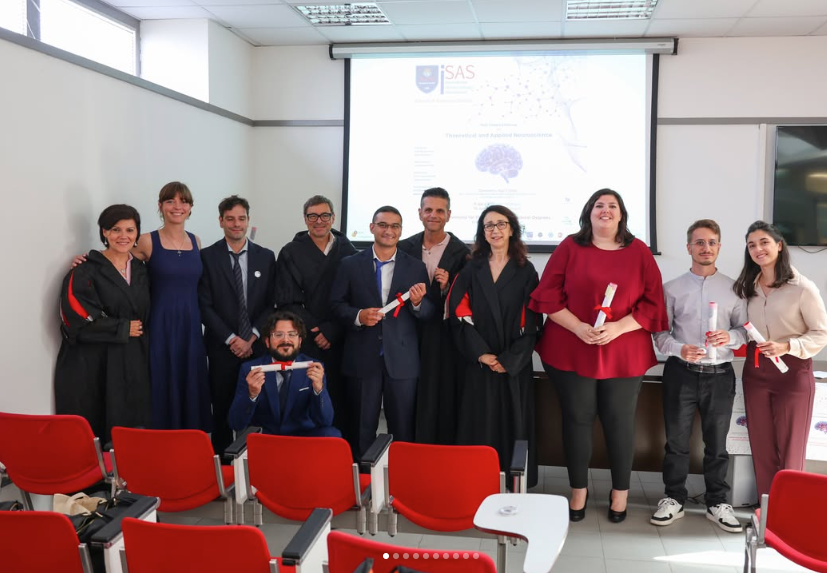
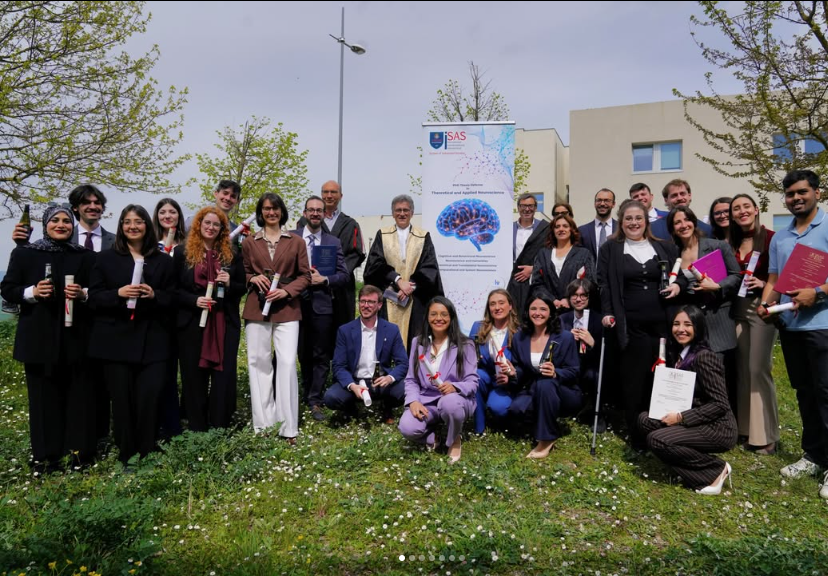
82 PhD candidates currently enrolled
Cycle XXXIX: 38 candidates · Cycle XL: 21 candidates · Cycle XLI: 23 candidates
Data updated: August 2026 · Active cycles XXXIX–XLI
PROGRAMME PROFILE
Connecting the national neuroscience community
Neuroscience is intrinsically interdisciplinary and intersectoral. Progress in the field depends on the ability to connect the strongest scientific and technological expertise available in universities, research centres, hospitals and companies.
The programme creates a national research and training network spanning neurobiology, neurology, psychiatry, pharmacology, cognitive science, psychology, computational neuroscience, neuroengineering and the human and social sciences.
Its objective is to prepare researchers capable of conducting autonomous and original scientific work in fundamental, applied, translational and clinical neuroscience. Training combines theoretical knowledge, experimental methods, advanced technologies, data analysis and direct participation in collaborative research.
The programme is delivered in English and is designed for an international community of PhD candidates distributed among the institutions participating in the national network.
NATIONAL RESEARCH NETWORK
Universities, research centres, hospitals and industry
University network
The programme connects UNICAM with departments and research groups at Sapienza University of Rome, the Universities of Genoa, Bologna, Messina, Ferrara, Naples Federico II and Cagliari, together with other institutions contributing to the national educational catalogue and research infrastructure.
National research institutions
The Institute of Neuroscience of the National Research Council and the Italian Institute of Technology contribute advanced expertise, laboratories, technological platforms and training opportunities in experimental, cognitive, computational and translational neuroscience.
Clinical research institutions
Clinical and translational activities are strengthened by collaboration with major healthcare and research institutions, including IRCCS San Raffaele, IRCCS Ospedale Sacro Cuore Don Calabria and the University Hospital of Padua.
Industrial partners
Industrial participation supports pharmaceutical development, neurotechnology, advanced sensor systems, telemonitoring, precision medicine, neurorehabilitation and the transfer of scientific results into innovative products and services.
RESEARCH AREAS
Understanding the nervous system across levels and disciplines
Cognition and behaviour
Perception, language, memory, attention, action, decision-making, intelligence, emotion, personality, motivation and the study of cognitive and behavioural disorders.
Molecular, cellular and systems neuroscience
The molecular and cellular mechanisms of nervous-system development, function and disease, synaptic physiology, neuroplasticity, neural circuits and complex brain systems.
Clinical and translational neuroscience
Neurological and psychiatric diseases, neurodevelopmental disorders, neurorehabilitation, biomarkers, drug discovery, clinical trials, personalised medicine and digital healthcare.
Computational neuroscience and neuroengineering
Mathematical modelling, artificial intelligence, machine learning, signal processing, connectomics, brain–machine interfaces, neural prostheses, wearable devices and neurorobotics.
Neuroscience and the human sciences
Neurophilosophy, neuroethics, neuroeconomics, neurolaw, neuroeducation, neuroaesthetics, neuropolitics and the neural foundations of social, moral and creative experience.
RESEARCH PROFILE
Curricula
CURRICULUM 01
Cognitive and Behavioural Neuroscience
The curriculum provides theoretical and methodological training in perception, language, memory, attention, action, decision-making and intelligence and examines their relationships with emotion, personality and motivation.
Its interdisciplinary approach draws on experimental psychology, medicine, linguistics, neuroscience and STEM disciplines. Research also considers cognitive deficits and their possible clinical and translational implications.
Training combines theoretical courses, methodological education and practical experience with technologies such as EEG, TMS, transcranial electrical stimulation, eye tracking and magnetic resonance imaging.
CURRICULUM 02
Neuroscience and Humanities
The curriculum explores the growing interaction between neuroscience and disciplines traditionally belonging to the humanities and social sciences.
Research fields include neuroaesthetics, neuroeducation, neuroeconomics, neurolaw, neuroleadership, neuropolitics, neurophilosophy and neuroethics.
These research domains investigate how neural mechanisms contribute to artistic and scientific creativity, learning, moral and economic decisions, social behaviour, leadership and the broader understanding of human nature.
CURRICULUM 03
Preclinical, Clinical and Translational Neuroscience
The curriculum promotes the transfer of knowledge acquired in laboratories into experimental medicine and clinical practice, particularly in neurorehabilitation and drug development.
Research includes genetic and molecular mechanisms of neurological and psychiatric disorders, neurodevelopment, neuroimaging, electrophysiology, neuropsychology, biomarkers, brain connectivity, pharmacological targets, clinical-trial design and the gut–brain axis.
Further areas include optogenetics, chemogenetics, computational modelling, machine learning, telemedicine, telerehabilitation, serious games and the ethical implications of neuroscience research and clinical innovation.
CURRICULUM 04
Computational and System Neuroscience
The curriculum develops and applies quantitative methods to neurophysiology and neurobiology and provides mathematical, computational and engineering tools that are also relevant to the other curricula.
PhD candidates learn to build mathematical models and computer simulations to investigate the development and functions of the nervous system and to analyse complex experimental data.
Translational applications include wearable and implantable neurotechnologies, neural interfaces, advanced signal processing, machine learning and medical devices designed to restore functions impaired by neurological disorders or traumatic injury.
ACADEMIC GOVERNANCE
Coordinator and National PhD Programme Board
A multidisciplinary Board operating on a national scale
The programme is coordinated by Prof. Roberto Ciccocioppo and supported by a large national Board bringing together academics, researchers, clinicians and professionals from the participating universities, research institutions, hospitals and companies.
Its composition covers psychology, medicine, biology, pharmacology, neuroscience, engineering, physics, computer science and the human sciences, supporting both specialised and cross-curricular doctoral projects.
DOCTORAL TRAINING
A shared national training environment
Theory, experimentation and scientific practice
Training includes theoretical and practical courses delivered by lecturers and researchers from the institutions participating in the national network. Some activities are curriculum-specific, while others are open to the entire doctoral community.
Theoretical activities may be delivered online to facilitate participation across Italy. Practical modules are held in person at the institutions providing the required laboratories, clinical facilities and technological platforms.
The programme also develops expertise in literature review, experimental design, research methods, statistical analysis, scientific writing, research ethics, Open Science, data management and the communication and exploitation of scientific results.
Workshops, seminars and national meetings
At least one shared workshop or summer school is organised during each year of the programme. PhD candidates present and discuss their research and receive feedback from members of the Programme Board.
Additional activities include thematic seminars, journal clubs, team-working experiences and national meetings connected with the Italian neuroscience community.
Planned doctoral courses – Cycle XLII
The planned course structure combines cognitive, behavioural, computational, technological, preclinical and translational neuroscience.
13 courses · 134 total hours over the three-year programme
| Course | Hours | Year | Reference curricula | Assessment |
|---|---|---|---|---|
| Non-invasive brain stimulation | 8 | 1st | Cognitive and Behavioural; Computational and System; Preclinical, Clinical and Translational | Pass/fail |
| Implementation of imaging biomarkers in real-world settings | 8 | 1st | Cognitive and Behavioural; Computational and System; Neuroscience and Humanities | Pass/fail |
| Wearable robotics for advanced rehabilitation in patients and healthy individuals | 8 | 1st | Computational and System Neuroscience | Pass/fail |
| Health and cognitive-performance education | 16 | 3rd | Cognitive and Behavioural; Neuroscience and Humanities | Pass/fail |
| Rodent models of neurodevelopmental disorders | 8 | 1st | Cognitive and Behavioural; Preclinical, Clinical and Translational | Pass/fail |
| Behavioural phenotyping in rodent models of neuropsychiatric disorders | 8 | 2nd | Cognitive and Behavioural; Preclinical, Clinical and Translational | Pass/fail |
| Use of animal models for investigating psychiatric diseases and neurodevelopmental disorders | 12 | 3rd | Cognitive and Behavioural; Preclinical, Clinical and Translational | Pass/fail |
| Computational neural engineering | 14 | 2nd | Cognitive and Behavioural; Computational and System; Neuroscience and Humanities | Pass/fail |
| Sensory-motor neuroprosthetics | 8 | 3rd | Cognitive and Behavioural; Computational and System | Pass/fail |
| Early brain development: plasticity, critical periods and the role of experience | 12 | 2nd | All curricula | Pass/fail |
| Early language development | 8 | 3rd | Cognitive and Behavioural; Computational and System; Neuroscience and Humanities | Pass/fail |
| CNS drug discovery and development from preclinical research to commercialisation | 12 | 3rd | Cognitive and Behavioural; Preclinical, Clinical and Translational | Pass/fail |
| Non-invasive brain stimulation for the causal investigation of electrocortical spatial and temporal dynamics | 12 | 2nd | Cognitive and Behavioural; Computational and System; Neuroscience and Humanities | Pass/fail |
The planned courses are complemented by seminars, practical training, laboratory activities, workshops and courses offered throughout the national network.
Additional educational opportunities across the network
The national catalogue provides access to a broad range of specialist activities, including intracerebral recordings, EEG and TMS, developmental neuroscience, functional neuroanatomy, virtual reality, neuroimaging, brain stimulation, neural interfaces, bioelectronic medicine and behavioural models of neurological and psychiatric disorders.
Further opportunities cover research ethics, sleep, consciousness, philosophy of science, graph theory, machine learning, MATLAB and Python programming, electrophysiological-signal analysis and computational methods for neuroscience.
RESEARCH ENVIRONMENT
Distributed laboratories and advanced scientific facilities
Experimental neuroscience platforms
The participating institutions provide animal models, cell-culture laboratories, in-vitro and in-vivo electrophysiology, behavioural facilities, molecular and genetic analysis, advanced microscopy and systems for investigating neural development, function and disease.
Neuroimaging and human neuroscience
Facilities include EEG and high-density EEG, TMS and combined TMS–EEG, functional and diffusion magnetic resonance imaging, intracranial recordings, eye tracking, peripheral electrophysiology and technologies for studying sensory, motor and cognitive functions in humans.
Imaging, sequencing and cellular technologies
The national network provides confocal, two-photon, live-cell and advanced spectroscopic microscopy, flow cytometry and cell sorting, viral-vector facilities, next-generation sequencing, cryogenic electron microscopy and specialised animal facilities.
Clinical and rehabilitation environments
The participation of hospitals and clinical research institutions allows PhD candidates to work in environments where fundamental, translational and clinical research are connected with diagnostic, therapeutic and neurorehabilitation practice.
Computing, software and data resources
PhD candidates have access to Python libraries for scientific computing, machine learning and artificial intelligence, MATLAB, image-analysis and statistical software, container-compatible applications and virtual computational environments.
Distributed computing resources and access to high-performance computing infrastructures support computational neuroscience, artificial intelligence, large-scale data analysis and advanced modelling.
LIBRARY AND DIGITAL RESOURCES
Shared access across the national network
PhD candidates benefit from the extensive library collections, electronic journals, biomedical and humanities databases and patent-search resources available through the universities and research institutions participating in the programme.
CLINICAL AND INDUSTRIAL INNOVATION
Drug discovery and advanced formulations
Industrial collaboration supports the discovery and development of new pharmacological and phytotherapeutic approaches for neurological and neuropsychiatric disorders, including controlled-release systems, micro- and nano-encapsulation and precision formulations.
Digital medicine and neurorehabilitation
Research with technology companies contributes to wearable and contactless sensors, telemonitoring, remote diagnosis, personalised neurorehabilitation, embedded systems and the real-time transmission and analysis of physiological and motor data.
CAREER PERSPECTIVES
Research, healthcare, technology and society
Graduates may pursue careers in universities, public and private research institutions, hospitals, healthcare organisations, specialist diagnostic laboratories and pharmaceutical, chemical and biotechnology companies.
Further opportunities are available in artificial intelligence, computational neuroscience, neuroinformatics, brain–machine interfaces, robotics, neural prostheses, neurorehabilitation, medical diagnostics and companies developing neuroscience-related technologies and treatments.
The programme also supports professional pathways in neuroeconomics, communication and scientific dissemination, research foundations, financial and market analysis and other sectors applying knowledge of cognition, behaviour and decision-making.
MOBILITY AND COLLABORATION
Research across institutions and disciplines
The national organisation enables exchanges among the universities, research institutions, clinical centres and companies participating in the programme. PhD candidates can access technological platforms located at institutions other than their principal research site through collaborative research projects and specific agreements.
National and international mobility, co-supervision and participation in collaborative projects are encouraged, especially for interdisciplinary research requiring expertise or infrastructure from more than one institution.
Mobility and research periods → | Research budget and missions →
ACCREDITATION AND QUALITY
Positive ANVUR evaluation – Cycle XLII
For the academic year 2026/2027, ANVUR proposed the accreditation of the National PhD Programme in Theoretical and Applied Neuroscience.
The requirements concerning the participating institutions, the composition and scientific qualification of the PhD Programme Board, the number of funded positions, sustainability, scientific facilities and the national training project were considered satisfied.
The evaluation records an average of 45 hours of doctoral education per year for each cycle. Teaching is clearly distinguished from first- and second-cycle degree programmes and is closely connected with advanced research, practical activities, laboratories, research infrastructures and interdisciplinary education.
PHD ADMISSIONS · APPLICATIONS AND REFERENCES CLOSED · SELECTION UNDERWAY
Admission and current calls
For Cycle XLII (a.y. 2026/2027), applications for the separate second-session procedure concerning 1 Regione Marche-funded scholarship in the National PhD Programme in Theoretical and Applied Neuroscience closed on 22 October 2026 at 1:00 p.m. Italian time, and the deadline for reference letters expired on 23 October 2026 at 1:00 p.m. Italian time. The scholarship is linked to the curriculum Preclinical, Clinical and Translational Neuroscience and to the Research Topic “Chronic pain and neurodegeneration: a translational approach to understanding biological mechanisms and developing innovative therapeutic strategies”. The selection procedure is now underway. The Selection Committee and the online interview details have been published on the official Call page, while the shortlist is still pending publication. The interview for shortlisted candidates is scheduled for 26 October 2026 at 15:00 CET and will take place online via Webex. Final merit rankings for the first-session TAN admission procedure have also been published.
Contacts and programme support
Contact the Programme Coordinator, the relevant research institution or the Advanced Studies Office for academic and administrative information.