
What is a PhD?
FUTURE PHD CANDIDATES
What is a PhD?
A PhD is the third and highest cycle of university education. It combines an original research project, advanced specialist training and the development of skills for academic and professional research careers.
MORE THAN AN ADVANCED COURSE
A PhD is primarily a supervised research experience
Doctoral candidates do not simply attend classes. They develop an original research project, work with experienced researchers, participate in specialist and transversal-skills training and progressively become independent researchers.
01 · DOCTORAL EDUCATION
The highest level of university education
The doctorate follows first- and second-cycle university education and leads to the award of a doctoral degree after completion of the research, training and final examination requirements.
02 · ADMISSION
Admission through a public selection
Admission normally requires a second-cycle degree or a comparable foreign qualification. Candidates apply through the official Call and take part in the selection procedure established for the relevant admission cycle.
03 · RESEARCH
An original research project
The central element of the PhD is an original research project that contributes new knowledge, methods, interpretations or applications within a defined scientific field.
04 · SUPERVISION
Supervision and progressive independence
Each candidate works with a Supervisor and, where applicable, one or more co-supervisors. Their role is to guide the scientific pathway while supporting the candidate’s gradual development as an independent researcher.
05 · TRAINING
Research and advanced training
Doctoral education combines research activity with specialist courses, seminars and common training designed to develop transversal skills such as communication, ethics, project management, Open Science and career development.
06 · COMMITMENT
A full-time commitment
A PhD normally requires continuous and full-time engagement in research and training over several academic years. The exact duration and any conditions linked to a specific position are stated in the relevant Call.
07 · INTERNATIONAL DIMENSION
An international research environment
PhD candidates work in international research networks and may undertake research or training periods at universities, laboratories, research institutions, companies or other qualified organisations.
08 · SCIENTIFIC COMMUNICATION
English and scientific communication
English is central to doctoral education at UNICAM and is used in research communication, international collaboration, training activities and the preparation or presentation of scientific results.
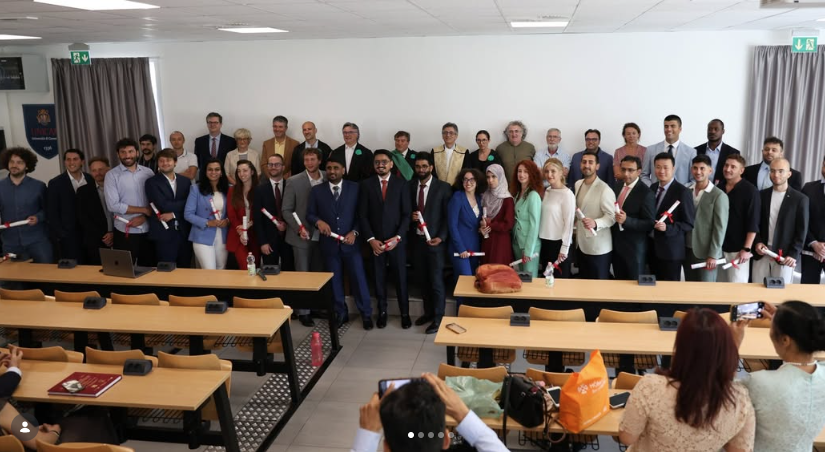
COMPLETING THE PHD
From the doctoral thesis to new professional opportunities
09 · THESIS & FINAL EXAMINATION
Thesis, external review and final examination
The doctoral pathway concludes with an original thesis evaluated by external experts, followed by its public defence before a formally appointed examination committee.
10 · AFTER THE PHD
Academic and professional opportunities
A PhD prepares researchers for careers in universities and research institutions, but also develops analytical, technical, organisational and communication skills relevant to companies, public bodies and other professional environments.
BEFORE APPLYING
Check the conditions of the specific position
PhD opportunities may differ in research topic, curriculum, host institution, scholarship, mobility requirements and additional project obligations. Always consult the current Call and its annexes before applying.
RELATED INFORMATION
Financial conditions and simultaneous enrolment
Scholarship conditions and compatibility with another university Programme are governed by specific rules and are explained in separate pages.
NEXT STEP
Ready to explore your options?
Compare the UNICAM PhD Programmes and consult the current admission procedures to identify the research opportunities presently available.